
PTSD and Your Brain: Why Your Symptoms Are Real, How We Prove Them, and What a Trauma‑Informed Lawyer Does for You
If an accident, assault, or close call left you jumpy, sleepless, on edge, or unlike yourself, you’re not weak. You’re injured. Posttraumatic stress isn’t “in your head” in the dismissive sense. It reflects measurable brain and body changes that modern neuroscience can see and law can recognize. That matters for your health, and it matters for your case.
What PTSD does in the brain
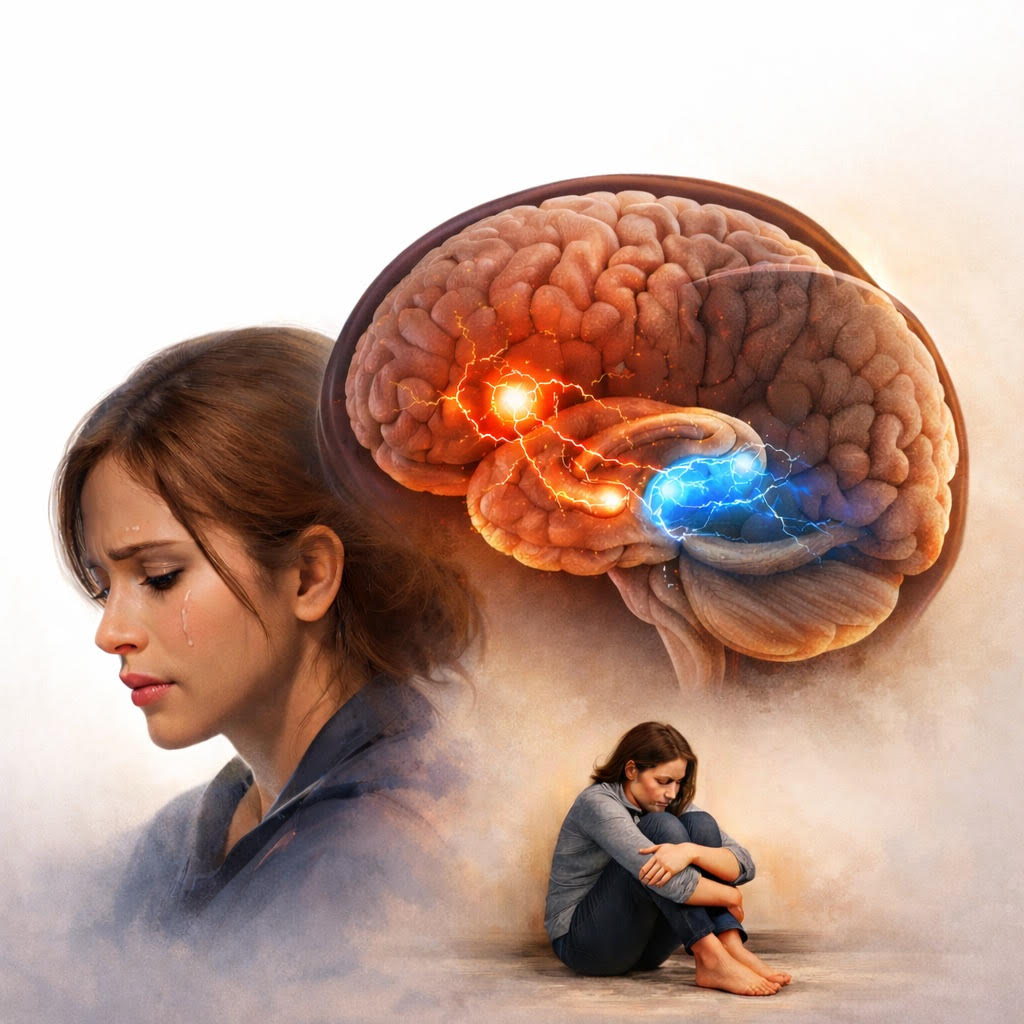
- Amygdala: your “smoke detector.” After trauma, it stays on high alert, driving hypervigilance, startle, panic, and irritability.
- Hippocampus: the memory/timekeeper. Stress hormones can shrink and quiet it, making sleep, memory, and a felt sense of “the past is past” harder. Nightmares and reliving show up here.
- Prefrontal cortex: the thinking/regulation center. Under-activation makes focus, decision-making, and emotion regulation harder, especially under stress.
- Insula: the body’s sensor. Dysregulation can cause numbing or difficulty reading your own signals, which complicates anxiety, pain, and appetite. These are not character problems. They’re neural patterns tied to the DSM-5 PTSD symptom clusters that researchers have mapped for decades. The “invisible” is now visible.
Why PTSD is a bodily injury PTSD produces structural and functional brain changes and measurable physiological shifts (heart rate, blood pressure, cortisol, sleep). Treating PTSD as only“emotional” ignores half the injury. In my legal scholarship, I argue PTSD should be classified and compensated as a bodily injury, much like TBI, because the brain and body are demonstrably altered. The mind-body split is outdated.
“But my MRI was normal…” That’s common. Standard scans often miss functional changes. Courts already accept that many legitimate TBIs don’t show on routine imaging; strong cases rely on multidisciplinary evidence: neuropsychological testing, medical exams, symptom trajectories, collateral reports, and when appropriate, advanced physiology or imaging. PTSD should be substantiated in the same way. The invisible injury is provable.
PTSD and TBI often overlap Crashes and assaults can cause both concussion/TBI and PTSD. Symptoms like poor concentration, insomnia, irritability, dizziness, and anxiety can blend. Good lawyering doesn’t force an either/or; it documents both conditions and their combined impact on work, relationships, and quality of life.
What to do now
- Get evaluated early, and tell providers about the traumatic exposure, head impact or whiplash, memory gaps, and current symptoms.
- Track your “before vs. after.” Short daily notes on sleep, headaches, focus, mood, panic, and triggers become powerful evidence.
- Protect recovery. Sleep, gradual return-to-activity, and trauma‑informed care matter for healing, and for showing you did your part.
How we build a PTSD case at Sweeton Injury Law
- We listen for the full story: who you were before, who you are now, and what changed.
- We assemble the right experts: trauma‑informed physicians, clinical neuropsychologists, and, when helpful, psychophysiology or advanced imaging consultants.
- We use objective testing to quantify attention, memory, processing speed, and executive function, and we connect those findings to day‑to‑day limitations.
- We show the overlap and the differences between PTSD and any brain injury, pushing back on attempts to minimize either as “just stress.” The science is on your side.
- We prove the future: treatment needs, vocational impact, and the real cost of living with PTSD.
Why hire a trauma‑informed, neuroscience‑savvy firm Many firms run hundreds of files at once. We cap our caseload at 25 so you get individualized strategy, biweekly updates, and proactive communication. We lead your case and collaborate with top trial lawyers and medical experts when it benefits you. If we’re not the right fit, we’ll help you find a team that is.
You’re not alone, and you’re not imagining this. PTSD is an injury to the brain and body that deserves real treatment and real compensation. If you’re wondering whether what you’re experiencing “counts,” reach out. Even a short conversation can clarify next steps and protect your health, your claim, and your future.


.jpg)