
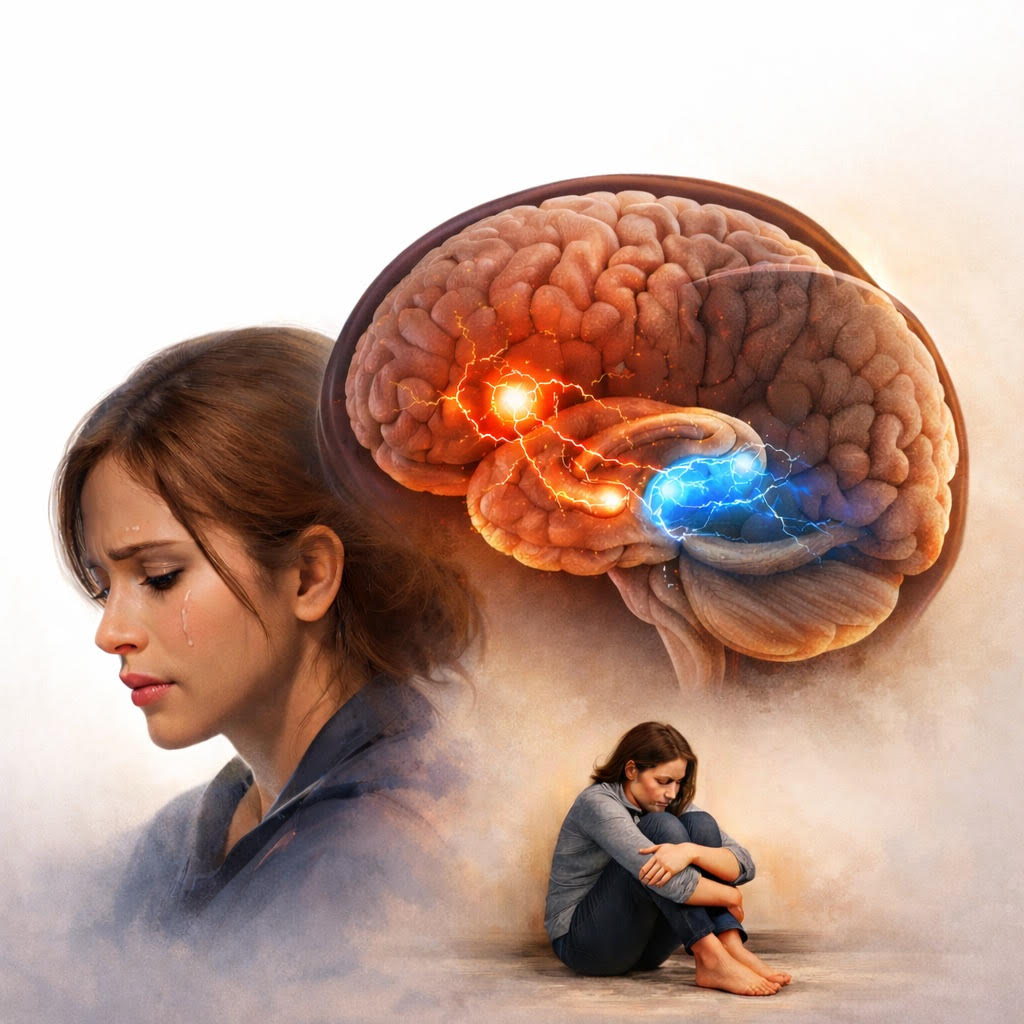
If you are a survivor of sexual assault, there is something I need you to understand before you read another word: your brain did exactly what it was supposed to do. The nightmares, the flashbacks, the way your body freezes when something reminds you of what happened. None of that is a sign that something is wrong with you. It is a sign that something was done to you, and your brain recorded every bit of it.
I say this as someone who has spent over two decades studying the neuroscience of trauma, and who now represents survivors in the legal system. The intersection of those two worlds is where this firm lives. And it is where your case can be won or lost.
What Actually Happens to Your Brain During a Sexual Assault
Most people think of trauma as an emotional experience. It is. But it is also a neurobiological event, a physical process that changes how the brain functions, sometimes permanently.
During a sexual assault, the brain's threat detection system, centered in the amygdala, goes into overdrive. Stress hormones flood the body: adrenaline, cortisol, opiates, oxytocin. The prefrontal cortex, the part of the brain responsible for rational thought, language, and decision-making, essentially goes offline. The brain shifts all of its resources to survival.
This is why so many survivors describe freezing during an assault. The clinical term is tonic immobility, an involuntary paralysis triggered by the brain's defense circuitry. You are conscious. You are aware. But you cannot move or speak. Research shows that survivors who experience tonic immobility during an assault are significantly more likely to develop PTSD and severe depression afterward.
This matters because "why didn't you fight back?" is still one of the first questions survivors face. The answer is neuroscience. Your brain chose the response that gave you the best chance of surviving. That is not failure. It's survival, and it's intelligent.
Why Your Memory Doesn't Work the Way People Expect
Survivors often struggle to recall details in a linear, chronological way. There is a reason for that.
The hippocampus, the brain structure responsible for organizing memories into a coherent timeline, is impaired during extreme stress. Memories get encoded in fragments: a smell, a sound, the texture of a surface, a feeling of pressure. The details are there. They are stored in the brain. But they do not come back in the neat, orderly narrative that investigators, insurance adjusters, and defense attorneys expect.
This is not a credibility problem. It is a neuroscience problem. Fragmented memory after trauma is not a sign of dishonesty. It is one of the most well-documented features of how the human brain processes overwhelming threat. It also means that recall can improve over time, especially after sleep cycles allow the brain to consolidate what was encoded during the event.
When a survivor's story shifts or fills in over days and weeks, that is not inconsistency. That is how traumatic memory actually works.
PTSD Is Not Just an Emotional Reaction. It Is a Brain Injury.
Post-traumatic stress disorder after sexual assault is one of the most misunderstood injuries in medicine and in law.
Neuroimaging research has shown that PTSD physically changes the brain. The amygdala becomes hyperactive, locked in a state of constant threat detection. The prefrontal cortex, which should be regulating that alarm system, becomes underactive. The hippocampus can actually shrink in volume.
The result is a nervous system that cannot tell the difference between then and now. A particular scent, a tone of voice, a time of year, a physical position: any of these can trigger the brain into re-experiencing the assault as if it is happening in the present moment. This is not a choice. It is not a failure of willpower. It is the brain doing what traumatized brains do.
Studies show that sexual assault survivors develop PTSD at extraordinarily high rates, with the vast majority of women developing symptoms within the first two weeks of an assault. For many, those symptoms become chronic. They affect sleep, concentration, relationships, work performance, and the ability to feel safe in your own body.
These are real, measurable injuries. And they deserve to be treated that way, by doctors, by courts, and by the people around you.
Why This Matters Beyond the Doctor's Office
Here is the part most survivors do not hear enough: what happened to your brain is not just a medical reality. It is legal evidence.
In a civil case, the central question is damages. What was the harm? How severe is it? How long will it last? PTSD after sexual assault is not a vague emotional complaint. It is a diagnosable condition. It can be documented, measured, and presented in a way that holds up in court.
But only if your legal team understands the science.
If you have survived sexual assault and want to understand your legal options, we are here. Consultations are free, confidential, and judgment-free.
Start Your Free Case Review | (816) 750-1954 | jsweeton@sweetoninjurylaw.com


.jpg)