
.jpg)
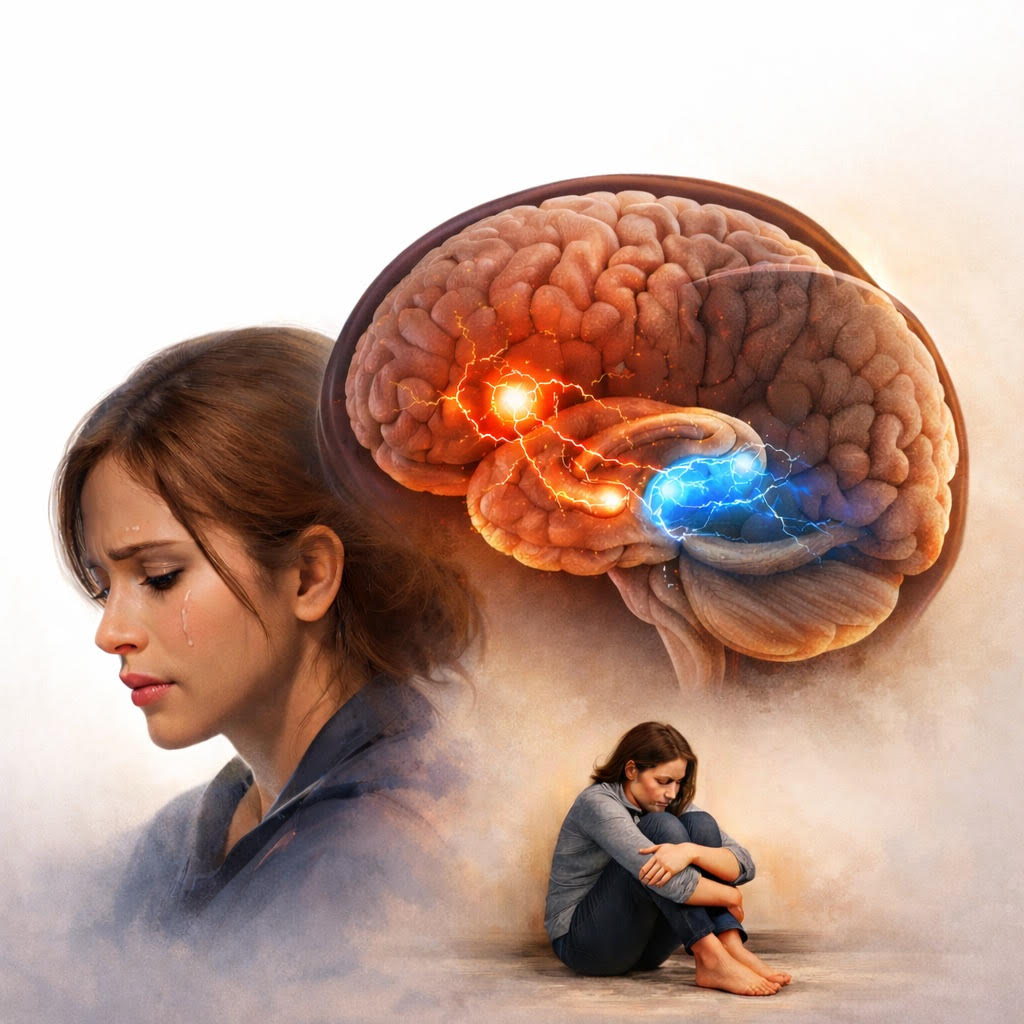
A couple of years ago I wrote a law review article, “PTSD as Bodily Injury: Perspectives from Neuroscience and Medical Psychology,” making a simple point the law has been slow to adopt: PTSD isn’t just “emotional distress.” It’s a condition with measurable effects on the brain and body, and it should be treated and compensated as a bodily injury. Here’s what that means for you.
What “bodily injury” really means here
• The brain is part of the body. When severe stress rewires brain circuits, that’s a physical change with real-world consequences. Courts often privilege injuries they can see. Modern science makes PTSD visible through objective markers.
• Emotional and physical injuries almost never separate cleanly. Pain, startle, sleep disruption, and attention problems are bodily processes. When those shift after trauma, you have a bodily impact, not just a feeling.
How PTSD shows up as a body-based condition
• Functional shifts: Networks that handle threat detection, memory integration, and regulation run “hot” or “offline,” which changes sleep, focus, startle, and stress tolerance.
• Physiological signatures: Autonomic arousal patterns, stress-hormone rhythms, and sleep architecture often look different post-trauma.
• Symptom logic: Each core symptom cluster maps to known brain-and-body processes, which is why your experience feels so “automatic.” This is injury logic, not weakness.
Why this legal reframing matters
• Evidence strategy changes. If PTSD is understood as bodily injury, we build your case like we would for other physical harms: multi-method evaluation, objective testing, and expert synthesis. We’re not asking a jury to take your word for it; we’re showing the injury.
• Damages valuation improves. Medical care, rehabilitation, and future needs are clearer when the injury is recognized as physical as well as psychological. That affects settlement leverage and trial outcomes.
• Fairness aligns with science. TBI is widely treated as bodily injury. PTSD and TBI share neurological features and symptom overlap. Consistency demands similar legal treatment.
How a strong PTSD case is proven
• Document the delta: who you were before vs. now, captured through your account and observations from people who know you well.
• Use converging data: trauma-focused medical exams, validated psychological measures, neuropsychological testing where appropriate, and targeted physiological or neuroimaging when it adds clarity. The strength is in the convergence, not any single test.
• Clarify co-occurring injuries: If there’s also a concussion or TBI, we map where symptoms overlap and where they diverge, so nothing gets minimized.
• Translate to impact: connect the science to daily function, work capacity, treatment trajectory, and long-term costs in a way decision-makers can grasp quickly.
What you can do now
• Get evaluated promptly and tell providers exactly what changed after the event.
• Keep a simple log of sleep, concentration, panic/startle, avoidance, and what makes days better or worse. Patterns are persuasive.
• Seek trauma-informed care. It supports recovery and creates credible records that reflect the reality of your injury.
Why hire us for this work
I live at the intersection of trauma, neuroscience, and law. At Sweeton Injury Law, we limit active cases to 25 so we can do this right: biweekly updates, deep evidence development, and collaboration with top medical and legal experts when your case calls for it. Impact over volume. If we’re not the best fit, we’ll help you find someone who is.
Bottom line
PTSD is not a “soft” injury. It’s a body-and-brain injury the law should recognize as such. If a traumatic event has changed how you sleep, think, feel, or function, let’s talk about a strategy that treats your experience like the real injury it is.
If you want to read the law review article I wrote, ask and I’ll share the citation.


.jpg)